You go long the moment the line turns green, and for a few minutes it looks like a clean call. Then the candle closes, the line snaps back above price, and the flip you traded on quietly disappears. The setup was real for about the length of one unfinished bar. That is the trap most traders fall into with the Gann HiLo activator, and it has almost nothing to do with the indicator itself.
By the end of this guide you will be able to read a flip you can lean on, tell normal line movement apart from a signal that never settled, and set the tool to the market in front of you instead of the number it shipped with.
Key Findings
- One line, two sides: the Gann HiLo activator tracks an average of recent lows in an uptrend and an average of recent highs in a downtrend, so its position alone tells you the current direction.
- It confirms, it does not forecast: the line only switches sides after price closes through it, which makes it a trend filter and a trailing reference, never a turn-caller.
- The lookback is the whole dial: the short three-period default reacts fast and flips often; a longer setting steadies the line and cuts range-bound whipsaws.
- A flip is final only at the close: the unfinished candle can move the line and a fresh flip around, so the settled switch is the one worth trading.
What does the Gann HiLo activator actually plot?
The Gann HiLo activator plots a single trailing line whose side of price tells you the trend. In an uptrend it follows a short simple average of the recent lows and rides below price, usually shown green. When the market turns down it jumps above price and tracks a short average of the recent highs, usually shown red. There is no in-between state. Price is above the line or below it, and that is the read.
The switch is the only event that matters. When a candle closes on the far side of the line, the line flips to the other side, changes colour, and starts trailing the new direction. Everything else is the line stepping along with the swings, giving the trend some room without you having to draw a thing.
Worth knowing where it comes from, because the name misleads people. Trader Robert Krausz introduced it in a 1998 article in Technical Analysis of Stocks & Commodities as part of his swing-charting work (Stocks & Commodities, 1998). It carries W.D. Gann’s name as a nod to the swing-trading tradition, not because Gann defined this particular line. So it is a modern moving-average tool wearing an old label.
What are the best Gann HiLo activator settings?
Start with the three-period default, then treat the lookback as the one dial that changes the tool’s character. It sets how many candles feed the averages of the highs and lows, which decides how tightly the line hugs price.
A short setting keeps the line right on the swings. It catches a turn early and switches often, so you see more signals and more of them fail in choppy conditions. Lengthen it to something like eight or ten and the line steadies, stepping past small pullbacks and only flipping on a genuine change of direction. The trade is the usual one: earlier and noisier, or later and cleaner. There is no correct number, only the number that fits the pair and timeframe you actually trade.
Does the Gann HiLo activator repaint?
On closed candles it does not repaint. After a bar closes, the averages that placed the line and the flip they produced are locked, and the history to the left of the live candle should not move when you refresh the chart. That part is dependable.
The live bar is where the damage happens. While the current candle is still forming, its high and low keep updating, so the newest average value and any flip on that bar can shift right until the close. That is normal, not a broken indicator. The error is reading a flicker mid-candle as a done deal, entering on it, and then watching the bar close back the other way so the flip un-happens. We walked through the same discipline in the non-repaint forex indicator guide: let the candle finish before you count the signal. To check your own build, note where the line sat at a past close, reload, and confirm it held.
Gann HiLo activator vs Supertrend vs Parabolic SAR
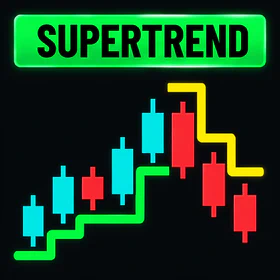
All three are stop-and-reverse trend tools that give you a binary read and a level to trail behind. What separates them is how each one decides where that level sits.
| Factor | Gann HiLo activator | Supertrend | Parabolic SAR |
|---|---|---|---|
| Distance driver | Averages of recent highs and lows | Average True Range (volatility) | An accelerating step factor |
| How the line moves | Steps with the swing structure | Widens and tightens with volatility | Speeds up as the trend extends |
| Signal event | Close past the line flips its side | Close past the line flips its side | Price touches the dots and reverses |
| Reads best in | Steady, structured trends | Fast, volatile markets | Strong, sustained runs |
| Common weakness | Whipsaws in a tight range | Whipsaws when volatility spikes | Flips early once a trend stalls |
- Gann HiLo activator
- Averages of recent highs and lows
- Supertrend
- Average True Range (volatility)
- Parabolic SAR
- An accelerating step factor
- Gann HiLo activator
- Steps with the swing structure
- Supertrend
- Widens and tightens with volatility
- Parabolic SAR
- Speeds up as the trend extends
- Gann HiLo activator
- Close past the line flips its side
- Supertrend
- Close past the line flips its side
- Parabolic SAR
- Price touches the dots and reverses
- Gann HiLo activator
- Steady, structured trends
- Supertrend
- Fast, volatile markets
- Parabolic SAR
- Strong, sustained runs
- Gann HiLo activator
- Whipsaws in a tight range
- Supertrend
- Whipsaws when volatility spikes
- Parabolic SAR
- Flips early once a trend stalls
The takeaway is not that one line beats the others. It is that they answer the same question with different assumptions about what should move the stop. If you want the level tied to the swing highs and lows you can see on the chart, the HiLo activator is the natural read. If you would rather the room scale with how much the market is actually moving, that volatility logic is exactly what the ATR indicator measures, and Supertrend wraps it into a flipping line. Many traders keep one trend line for the flip and a slower moving average beside it for context, so the two cover each other’s blind spots.
How does RelicusRoad Pro treat a trend flip?
RelicusRoad Pro starts from a rule the Gann HiLo activator teaches the hard way: a signal only counts once the candle that made it has closed. Every flip and level it commits is decided at that close and then held, so you are reading a fixed mark rather than a value still ticking around under your cursor. The same read carries across MT4, MT5, and TradingView, which spares you the habit of trusting one chart and doubting the next.
Be clear about what that does and does not do. A settled flip keeps you from chasing a switch that had not finished forming, and it hands you a level to lean a stop against. It does not judge whether the trade in front of you deserves your risk. That call stays yours. An indicator sharpens your timing and steadies your read; it cannot fix loose risk, and pretending otherwise is how good tools end up blamed for bad accounts.
Frequently asked questions
What is the Gann HiLo activator indicator? It is a trend-direction overlay that plots one trailing line on your price chart. In an uptrend the line tracks a short average of recent lows and sits below price; in a downtrend it tracks a short average of recent highs and sits above price. When a candle closes on the other side of the line, the line switches to the opposite side and its colour changes. That switch is the signal. It was introduced by trader Robert Krausz in a 1998 Technical Analysis of Stocks and Commodities article, and despite the name it is not drawn from W.D. Gann’s own writings.
What are the best Gann HiLo activator settings? The classic default is a three-period average of highs and lows, and that is a fair starting point on liquid pairs. The lookback is the only real dial. A shorter setting hugs price and flips quickly, so you get earlier signals and more false ones. A longer setting, say eight to ten, steadies the line and ignores small shakeouts, at the cost of switching later. Match the number to the timeframe and the pair’s noise rather than trusting one value everywhere.
Does the Gann HiLo activator repaint? On closed candles it does not repaint. Once a bar closes, the averages that set the line and any flip they produced are locked, and the line to the left of the current candle should stay put when you reload the chart. The live bar is the exception. While the current candle is still forming, the newest high and low keep changing, so the line and a fresh flip can shift until that bar closes. That is ordinary intrabar movement, not a fault. The mistake is treating a mid-candle flip as final and entering before the close.
Gann HiLo activator or Supertrend, which is better? They do the same job in different ways. The Gann HiLo activator sets its switch level from averages of recent highs and lows, so the line steps with the candles themselves. Supertrend sets its distance from Average True Range, so it widens and narrows with volatility. In a fast, volatile market Supertrend often gives the line more room and whipsaws a touch less; in steadier conditions the HiLo activator reads cleaner and hugs the swing structure. Neither is better in the abstract. Pick the one whose flips you can actually follow without second-guessing.
How do you trade the Gann HiLo activator without chasing? Use the flip as a filter, not a trigger. Wait for the candle to close past the line, confirm the direction with one other read you trust, then look to enter on a pullback toward the line rather than at the most stretched point. Trail your stop behind the line as the trend runs. Size each trade to the risk so one whipsaw flip in a range cannot undo a week of good decisions. The tool keeps you on the right side of direction; it does not tell you the trade is worth taking.
The Gann HiLo activator will not call the exact turn, and it was never built to. Read at the close, it tells you when direction has genuinely changed and gives you a line to trail behind, which is plenty if you stop trading the flips that had not settled yet.
See how RelicusRoad Pro locks every signal at the candle’s close →
Keep going on this topic
The Best Trading Indicators for MT4, MT5 and TradingView in 2026
An honest breakdown of trading indicators for MT4, MT5 and TradingView: which categories add real edge, which are noise, and how many you actually need.
- SSL Channel indicator explained: reading the baseline flip and the repaint catch
- HalfTrend Indicator Explained: Reading Trend Flips and the Repaint Question
- Gator Oscillator Guide: How to Read the Alligator's Bite
- Guppy Multiple Moving Average (GMMA): How to Read Trend Strength
- The repaint backtest trap: why a perfect history can lie
- Hull Moving Average Indicator: Faster Signals Without the Lag Trap
- Kagi charts explained: reading trend reversals without the noise of time
- Kaufman Adaptive Moving Average: Speed in Trends, Calm in Chop
- Keltner Channels: How to Read Volatility Without Chasing the Move
- Klinger Volume Oscillator: How to Read Volume-Driven Reversals
- KST indicator (Know Sure Thing): how to read the four-speed momentum line
- Laguerre RSI indicator: a faster RSI with one dial
- Linear regression channel indicator: how to read trend and mean reversion
- Market facilitation index: is the volume actually moving price?
- Mass index indicator: reading reversals before price turns
- McGinley Dynamic Indicator: The Adaptive Moving Average That Cuts Lag