Part-time forex trading is often marketed as a second income that fits into a few minutes each day. That promise skips the difficult parts: preparation, uncertain returns, overnight risk and the possibility of losing the entire trading allocation.
A full time job does not prevent someone from studying markets, but it creates a firm operational constraint. If a strategy needs attention during meetings, commuting or sleep, it is the wrong strategy for that schedule.
The objective is not to squeeze more trades into the day. It is to build a routine in which every required decision can be made without neglecting employment, family or health.
Start with an honest time audit
List when you can reliably access the platform for at least four weeks. Include commute, overtime, family commitments, sleep and your timezone relative to major market sessions.
Separate three types of work:
- Preparation: review calendar, mark levels and create scenarios.
- Execution: place, cancel or adjust orders under written rules.
- Review: reconcile broker statements, screenshots and journal entries.
Ten minutes may be enough to check an alert. It is rarely enough to research a new market, improvise a strategy and calculate risk safely. If a required task does not have a scheduled slot, remove it from the plan or choose a slower method.
Match the trading style to availability
Scalping
Scalping requires sustained focus, rapid order handling and close attention to spread and execution. It is generally incompatible with a job that can interrupt without warning. A hidden browser window during work is not a risk-control system.
Day trading
Day trading can fit someone whose free hours overlap a specific session, but the strategy must close or manage positions before availability ends. Short term trading also makes transaction costs a larger share of the expected move.
Swing trading
Forex swing trading uses positions that can remain open for several days. It requires fewer decisions, which may fit a day job, but introduces overnight exposure, swap charges, gaps and scheduled-event risk. Less screen time does not mean less financial risk.
Position trading
Longer-term strategies may require even fewer entries. They also expose capital to larger price movements and changing fundamental conditions. Position size must reflect the wider stop and longer holding period.
Use the comparison in swing trading vs day trading to choose based on constraints rather than excitement.
Choose timeframes for decision frequency, not signal quality
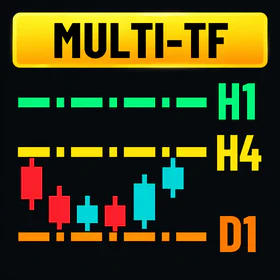
A four-hour or daily chart changes less frequently than a five-minute chart, so it can reduce the number of decisions. It does not automatically produce better signals or remove noise.
Select timeframes by asking:
- When does each candle close in my timezone?
- Can I review the close without interrupting work or sleep?
- Does the backtest assume entry at a price that is realistically available later?
- How often must stops or pending orders be managed?
- Can scheduled announcements occur while I am unavailable?
If a four-hour candle closes during a meeting and the entry disappears fifteen minutes later, the system is not truly compatible. Test an order method or a different timeframe rather than assuming delayed execution is harmless.
Build one preparation window
A repeatable evening or pre-work routine can take 20 to 40 minutes, depending on the strategy. It should have a fixed sequence:
- Review the economic calendar in the broker’s and local timezone.
- Check current spread, swap and any holiday schedule.
- Scan only the approved currency pairs.
- Mark valid market conditions and invalidation levels.
- Calculate entry, stop, target and position size.
- Place alerts or conditional orders only if the plan allows them.
- Record why every candidate qualifies or is rejected.
Do not expand the watchlist because no setup appears. A session with no valid trade is a complete result.
Use alerts without turning them into automatic signals
Price alerts can notify you that a planned decision point is near. They should not turn an unreviewed market into a trade.
An effective alert label includes:
- Pair and direction being considered.
- Timeframe.
- Setup name and expiry.
- What must be true after the alert.
- Link to the written scenario.
When the alert fires during a work obligation, let it pass. Missing an entry is less damaging than placing an order without checking spread, event risk or size.
Push notifications can also recreate constant chart watching. Limit alerts to pre-defined candidates and remove expired ones each day.
Treat pending orders as live risk
“Set and forget” is an appealing phrase, but every pending order needs management rules. Before placing one, define:
- Entry and expiry time.
- Stop and target attached at submission where supported.
- Maximum allowed spread or slippage.
- Whether the order is cancelled before an announcement.
- What happens if another correlated order triggers.
- Whether the broker guarantees or merely attempts requested stop prices.
A pending order can activate while you are unavailable and fill at a different price. Stops can also slip during gaps or thin liquidity. Confirm order behavior with the broker and keep account-level exposure below the planned limit.
Calculate size before work begins
Never choose lot size from the money you hope to make. Start with the maximum planned loss:
Risk amount = account value x risk percentage
Position size = risk amount / loss per lot at the stop distance
Include spread and commission in the estimate. Add swap if the position may remain open. Several correlated currency pairs can create much more exposure than each trade label suggests.
Our position-sizing guide explains pip value and account-currency conversion. If a broker’s minimum size creates more risk than the limit, skip the trade.
Create rules for scheduled events
Part-time traders may be unable to react when central-bank decisions, inflation data or employment reports are released. The plan should therefore decide in advance:
- How long before an event new orders are blocked.
- Whether pending entries are cancelled.
- Whether existing positions remain open, reduce or close.
- How abnormal spread affects the strategy.
- When normal trading resumes.
There is no universal correct event rule. The important point is to test and apply the same rule rather than making a last-minute decision from a phone notification.
Separate work devices and trading access
Check employment policies before installing software, visiting broker sites or using market data on a company device. Some roles impose restrictions on personal trading, conflicts of interest or use of corporate networks.
Practical boundaries include:
- Use a personal device and connection.
- Keep work calendar blocks free from trading alerts.
- Do not store broker passwords on an employer-managed browser.
- Avoid positions that require manual attention during protected work hours.
- Use multi-factor authentication and unique credentials.
Employment and regulatory rules vary by jurisdiction and role. Ask the employer’s compliance team or a qualified adviser when unsure.
Use a weekly review instead of constant adjustment
Schedule one or two review periods each week. Reconcile the broker statement with the journal and answer:
- How many valid setups occurred?
- Which were taken, missed or incorrectly traded?
- Were entry and exit rules followed?
- Did actual spread and slippage match test assumptions?
- Was any work or sleep interrupted?
- Did open risk ever exceed the account limit?
Separate strategy outcomes from execution quality. One losing trade can be correctly executed; one profitable trade can violate every rule. Update a strategy only through a defined change-and-retest process.
Use the post-trade review workflow to keep the evidence comparable.
A sample part-time schedule
| Time | Task | Maximum duration |
|---|---|---|
| Sunday evening | Calendar, watchlist and weekly scenarios | 45 minutes |
| Weekday morning | Check open risk and cancelled conditions | 10 minutes |
| Weekday evening | Review closed candles and place planned alerts | 30 minutes |
| Friday evening | Cancel expired orders and review statements | 30 minutes |
| Weekend | Journal and strategy metrics | 45 minutes |
- Task
- Calendar, watchlist and weekly scenarios
- Maximum duration
- 45 minutes
- Task
- Check open risk and cancelled conditions
- Maximum duration
- 10 minutes
- Task
- Review closed candles and place planned alerts
- Maximum duration
- 30 minutes
- Task
- Cancel expired orders and review statements
- Maximum duration
- 30 minutes
- Task
- Journal and strategy metrics
- Maximum duration
- 45 minutes
This is an example, not a prescription. The correct routine is one you can follow without stealing attention from work, family or rest.
What not to expect from part-time trading
Part-time trading does not guarantee part-time income. It does not make leverage safer, and a regular salary should not be used to refill an account after uncontrolled losses.
Do not risk money required for housing, bills, debt, healthcare or emergencies. Avoid borrowing to trade. If losses create pressure to hide activity, chase money or neglect responsibilities, stop live trading and seek qualified support.
Final takeaway
Trading forex around a full time job is primarily a scheduling and risk-design problem. Choose a style whose decisions fit your genuine availability, prepare scenarios in one window, use limited alerts, define event and order behavior, and review on a fixed schedule.
The best part-time plan may produce fewer trades. That is not a weakness. It is evidence that the process respects the rest of your life as well as the trading account.
Keep going on this topic
What Is Forex Trading and How Does It Work?
Learn what forex trading is, how currency pairs and prices work, who trades the market, what it costs and why leverage makes retail forex risky.
- How to Trade Forex for Beginners: A Safer Process
- Myfxbook vs FX Blue: A Beginner's Account Analytics Guide
- Don't Quit Your Job: The Case for Part-Time Trading
- Forex Demo Account vs Live Account: What Changes?
- Forex Cent Account vs Standard Account: Key Differences
- Forex Lot Size Explained: Standard, Mini, Micro and Nano
- Forex Spread, Commission and Swap: Calculate Your Cost
- The Tax Man Cometh: Trading as a Business vs. Hobby
- The Best & Worst of Mobile Trading
- Smart Money Concepts for Beginners: A No-Hype Starting Point
- The Casino in Your Pocket: Are You a Trader or a Gambler?
Related reading: How to Build and Master a Forex Trading Strategy.