You take the long the moment the SSL line turns green under price. It looks clean, the color is decisive, the trend just confirmed. Then the candle closes, the green flickers back to red, and the “confirmation” you acted on was never real. That gap between what a color-flip indicator shows while a bar is still moving and what it means once the bar is done catches more traders than any exotic setup ever will.
By the end of this guide you will know how the SSL Channel builds its signal, why it lags, whether it repaints, and how to test any copy you download before you trust it with real size.
Key Findings
- Two baselines, one line: the SSL Channel averages recent highs and recent lows, then shows a single colored line that sits below price in an uptrend and above it in a downtrend.
- The flip needs a close: the line swaps sides only when price closes past the opposite baseline, which filters out most single-bar spikes.
- It confirms, it does not predict: because it rides moving averages, the signal arrives after the turn has already begun.
- Closed bars hold; the live bar can flicker: a standard build keeps its printed history, but the color on an unfinished candle can switch and switch back before the close.
What is the SSL Channel indicator?
The SSL Channel, short for Semaphore Signal Level, is a trend-following line that answers one question: which way is price leaning right now? It does that with two hidden baselines. One is a moving average of recent highs, the other a moving average of recent lows. The visible line follows the lower baseline while price stays above it, and jumps to the upper baseline once price closes underneath, changing color as it goes.
Think of it as a traffic light for direction. Green line under the candles means the tool reads the market as up; red line over the candles means down. You are not watching two wiggly averages weave through price. You get one binary read that stays on its side until the trend actually gives up.
It ships for MetaTrader on MT4 and MT5, and several community versions live on TradingView. The core idea carries across all of them, but the plotting and the exact flip timing can differ between copies, which matters a great deal once we reach the repaint question below.
How does the SSL Channel baseline flip work?
The flip is a close-based event, not a soft crossover. Price has to finish a candle on the other side of the opposite baseline before the line swaps. While price sits above the average of the highs, the line stays green and low. The moment a candle closes below the average of the lows, the read turns down and the line moves above price.
That “wait for the close past a baseline” rule is what keeps a single spike from tripping it. A long upper wick that pokes through the level but closes back inside does nothing. Only a genuine close on the far side counts, which is why the SSL Channel stays quiet through a lot of the noise that shakes a raw moving-average crossover.
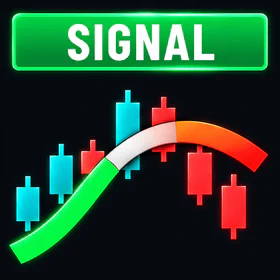
Read it left to right. The green line trails under price while the market climbs, ignoring the shallow dips. Price then rolls over, one candle closes past the baseline, and the line swaps above the candles as a red ceiling. One clean event at one close, instead of a dozen tiny crossings.
Here is the honest trade-off. Moving averages follow price rather than lead it, so the flip lands after the turn is already underway. In Technical Analysis of the Financial Markets (1999), John J. Murphy makes the same point plainly: a moving average is a trend-following tool that reacts to price, not a forecasting one. The SSL Channel inherits that lag. You are paying a little lateness in exchange for filtering out false turns.
Does the SSL Channel indicator repaint?
On closed candles, a standard SSL Channel holds its history. Once a bar finishes, its color and any flip stay put when you scroll back tomorrow. By that measure the confirmed signal is honest and you can trust what the chart shows on completed bars.
The problem lives on the candle still forming. Because the flip depends on where price closes against a baseline, the line can turn green mid-bar the instant price crosses the level, then snap back to red if price slips under again before the close. The finished history never changed; the tool just recalculated on a bar that was not done. That flicker is what most traders mean when they call a trend line a repainter, and it is exactly the trap from the opening.
One caveat worth stating flatly: not every copy is equal. Some rewritten scripts, including certain hybrid versions that pull in higher-timeframe or future-referencing data, genuinely move old signals. The split below is the honest one.
| Behavior | What you see | Trust it live? |
|---|---|---|
| Confirmed flip (closed bar) | Color and line fixed after the candle closes | Yes, this is the real signal |
| Provisional flip (live bar) | Color changes, may revert before the close | No, wait for the close |
| True historical repaint | Old flips move when you reload the chart | No, replace the indicator |
- What you see
- Color and line fixed after the candle closes
- Trust it live?
- Yes, this is the real signal
- What you see
- Color changes, may revert before the close
- Trust it live?
- No, wait for the close
- What you see
- Old flips move when you reload the chart
- Trust it live?
- No, replace the indicator
If you want a repeatable way to prove any tool keeps its signal after the close, the walkthrough on non-repaint forex indicators sets out the bar-replay method in full.
SSL Channel vs Supertrend vs moving-average crossover
All three call trend by watching price relate to a smoothed reference, and all three flip you from one side to the other. The differences are in what drives the flip and how twitchy each one feels.
| Tool | What drives the flip | Feel | Watch out for |
|---|---|---|---|
| SSL Channel | Close past a moving average of highs or lows | Steady, filters shallow pokes | Live-bar color flicker before the close |
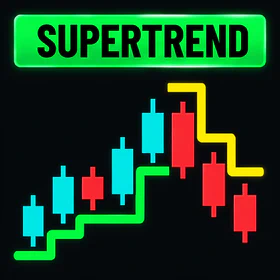
| Supertrend | Close past an ATR band around the median price | Flips a touch sooner than SSL | More whipsaw in tight ranges |
| MA crossover | Fast average crossing a slow average | Smoothest, slowest to react | Late flips give back a chunk of the move |
- What drives the flip
- Close past a moving average of highs or lows
- Feel
- Steady, filters shallow pokes
- Watch out for
- Live-bar color flicker before the close
- What drives the flip
- Close past an ATR band around the median price
- Feel
- Flips a touch sooner than SSL
- Watch out for
- More whipsaw in tight ranges
- What drives the flip
- Fast average crossing a slow average
- Feel
- Smoothest, slowest to react
- Watch out for
- Late flips give back a chunk of the move
If you like the volatility-gated version of this idea, the Supertrend trend-flip guide covers the same stop-and-reverse behavior with an Average True Range trigger instead of a high-low baseline. If you want to understand the plain two-line logic the SSL Channel is quietly built on top of, the moving average crossover strategy is the foundation. The SSL Channel sits between them: cleaner than a bare crossover, a shade slower than Supertrend.
How do you trade the SSL Channel without getting whipsawed?
Use it as a direction gate, not a trigger. While the line holds green under price, you only hunt longs; while it holds red above price, you only hunt shorts. You are not buying the color change itself. You are using its side to keep your bias from drifting, which is where a trend filter earns its place on the chart.
The failure mode is treating every flip as a trade. In a range, price keeps nudging across the baseline, the line keeps swapping color, and a trader who acts on each swap gets sawn apart. The fix is to demand that the market is actually trending before you respect the flips. A read of true range helps: when volatility is compressed and going nowhere, an ATR-based volatility check tells you the flips are noise and you stand aside.
No indicator fixes loose risk. The SSL Channel points you the right way and marks roughly where the current trend would break, which is a reasonable place to think about a stop. It will never size your position or decide how much you are willing to lose, and no length setting changes that. Fixed risk per trade, a defined exit, and the discipline to skip range-bound flips are what protect the account. The tool sharpens your timing; your judgment still has to show up.
Where RelicusRoad Pro fits
Everything on this page circles one worry: is the signal in front of you final, or is it still moving? A color that flashed green mid-candle and vanished, a downloaded copy you are not sure is clean, a flip that looked perfect on replay but flickered in real time. RelicusRoad Pro locks its signals at the candle close and leaves them there, so the read you acted on is the read you find an hour later, and the same one whether you are on MT4, MT5, or TradingView. It does not replace a trend line like the SSL Channel. It takes away the guesswork about whether the read beside it has settled.
Frequently asked questions
What is the SSL Channel indicator?
SSL stands for Semaphore Signal Level. The indicator plots two baselines, one from a moving average of recent highs and one from a moving average of recent lows, and then shows a single line that follows whichever baseline price is currently respecting. In an uptrend the line tracks under price along the lower baseline; when price closes below the upper baseline it swaps to the top and the color changes. Most builds turn the line green for up and red for down, so a glance gives you the trend read. It is available for MT4, MT5, and as community scripts on TradingView, and it is popular because it turns two moving averages into one clean on or off trend signal.
Does the SSL Channel indicator repaint?
A standard SSL Channel does not rewrite closed bars: once a candle finishes, the color and any crossover it printed stay in place when you scroll back later. The confusion comes from the live candle. Since the flip depends on where price closes relative to a baseline, the line can switch color mid-bar as price crosses the level and then switch back if price returns before the close. Nothing in the finished history moved; the tool simply recalculated on a candle that was not done. Some heavily modified variants, including certain hybrid builds, do reference future or higher-timeframe data and genuinely shift old signals, so test the exact copy you downloaded.
What are the best SSL Channel settings?
The main dial is the moving-average length used for the two baselines, commonly set to ten. A shorter length makes the line hug price and flip sooner, which catches turns early but throws more false swaps in choppy conditions. A longer length smooths the baselines so the line holds through pullbacks, at the cost of confirming the trend later. Some versions also let you pick the average type, such as simple, exponential, or weighted, which changes how much weight recent candles carry. There is no single correct number. Pick a length, count how often it flips on your pair and timeframe, and adjust one setting at a time rather than stacking changes.
Is the SSL Channel better than Supertrend?
They chase the same job with different math, and neither wins outright. The SSL Channel derives its flip from moving averages of highs and lows, while Supertrend builds a band from Average True Range around the median price. In practice the SSL Channel tends to lag a little more because moving averages smooth the turn, whereas Supertrend can flip a touch earlier and, as a trade-off, whipsaw more in tight ranges. The right pick depends on your timeframe and how much noise you can sit through. Load both on the same chart and compare the flips before you commit.
Can you trade with the SSL Channel alone?
You can use it as a standalone trend filter, but a trend line is not a full trading plan. It tells you which direction to favor and roughly where the current trend would fail, which is useful for keeping your bias consistent. It does not size your position, set your stop, or judge whether the level you are entering at makes sense. Traders who use it well treat the SSL color as a green light for direction and pair it with a separate entry trigger and a fixed risk rule. Trading every color change on its own, especially in a range, is a fast way to get chopped up.
Tired of second-guessing whether a color flip has actually settled? RelicusRoad Pro confirms its signals at the close and holds them fixed across MT4, MT5, and TradingView.
Keep going on this topic
The Best Trading Indicators for MT4, MT5 and TradingView in 2026
An honest breakdown of trading indicators for MT4, MT5 and TradingView: which categories add real edge, which are noise, and how many you actually need.
- Gann HiLo activator indicator: how to read trend flips without the lag
- HalfTrend Indicator Explained: Reading Trend Flips and the Repaint Question
- Standard Deviation Indicator: How to Read Market Volatility
- Stochastic Momentum Index Explained: A Cleaner Read on Momentum
- T3 moving average: what the volume factor really changes
- TD Sequential Indicator: How to Read the 9 and 13 Without Getting Faked Out
- Three Line Break Charts: A Trader's Guide to Reading Reversals
- Tick Charts vs Time Charts: How Bar Type Changes Your Signals
- Traders Dynamic Index (TDI): How to Read the All-in-One Forex Indicator
- The TRIX Indicator: Reading Triple-Smoothed Momentum Without the Noise
- True Strength Index indicator: reading TSI without chasing lag
- The Ultimate Oscillator: Reading Multi-Timeframe Momentum Without False Signals
- Vertical Horizontal Filter: trend or range before you trade
- Volume weighted moving average: the trend line that discounts quiet candles
- Vortex Indicator Explained: How to Confirm Trend Direction Without Repainting
- Waddah Attar Explosion indicator: reading the histogram without chasing a fake breakout