Forex candlestick patterns become confusing when several familiar shapes appear in the same small area. A doji forms, then a hammer, then a wide bearish candle. Is that three signals, a reversal or simply noise?
Start with a simpler fact: every candle summarizes four prices for one chosen period - the open, high, low and close. Pattern names help describe that data, but they do not reveal who placed every order or guarantee what the next candle will do.
When several patterned candles appear together, treat them as one developing price sequence. The useful information comes from the cluster’s location, direction, range and confirmation, not from adding up bullish and bearish labels.
What a candlestick can and cannot tell you
A bullish candle closes above its open; a bearish candle closes below it. The body shows the distance between open and close, while the upper and lower wicks show the extremes reached during the period.
From that data, a trader can observe:
- Whether price advanced or declined during the bar.
- Whether it moved far from the open and then returned.
- How the range compares with recent candles.
- Where the close sits within the high-low range.
A candle cannot prove that institutions accumulated a position, that stop orders caused the wick or that a reversal is about to start. Those explanations require order-level evidence that a retail chart normally does not provide.
Use candlesticks as a compact description of price movements. Then test whether a repeatable rule built around that description has value.
Why several pattern names can describe one cluster
Pattern definitions overlap. A small-body candle may qualify as a doji under one threshold and a spinning top under another. If the next candle has a large body, the pair may also qualify as an engulfing or outside formation.
That does not create multiple independent signals. The names are different ways of summarizing the same open and close data.
For example:
- Price falls into a previously tested support area.
- A small candle closes near its open.
- The next candle trades lower, reverses and closes above the prior body.
Someone may label the cluster a doji, hammer and bullish engulfing sequence. A more objective description is: downward movement stalled at a predefined area and a later candle closed above the prior body. That wording is easier to turn into testable rules.
Read the sequence from left to right
Use five questions when several forex trading candlestick patterns appear close together.
1. What happened before the cluster?
A reversal pattern needs something to reverse. After a sustained fall, a bullish rejection can have a different meaning than the same shape in the middle of a narrow range. Mark whether price was trending, ranging or moving erratically.
2. Where did it form?
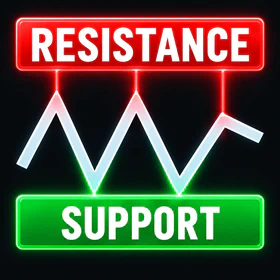
Location can include a tested support or resistance level, the edge of a trading range, a prior swing, or a planned breakout area. Draw these areas before the pattern completes to reduce hindsight bias. Our support and resistance guide explains how to define zones consistently.
3. How did the cluster open and close?
Compare the first open with the final close. Did the sequence make progress or finish near where it began? Also compare each closing price with its range. A candle that closes near its high conveys different information from one that gives back most of the move.
4. Did volatility change?
A wide-range candle after a quiet period may mark expansion, but it may also reflect a scheduled announcement and temporarily wider spreads. Compare the cluster with recent average range rather than calling every large candle “strong.”
5. What confirms or invalidates the idea?
Confirmation could be a close beyond the cluster high, a retest that holds, or another objective condition. Invalidation might be a close below a swing or a stop beyond a defined level. Both need to be set before entry.
Common single-candle patterns inside a cluster
Hammer and inverted hammer
A hammer has a small body toward the top of its range and a longer lower wick. An inverted hammer has the longer wick above the body. Their textbook interpretation depends on prior direction, body-to-wick thresholds and confirmation.
The same shape in a different location may receive a different name. A hammer-like candle after an advance can be described as a hanging man. Do not let the label replace the rule: specify wick ratio, body size, trend and confirmation.
Shooting star
A shooting star usually describes a small body with a long upper wick after an advance. It shows that price traded higher and closed back toward the lower part of the bar. It does not prove that sellers will control the next period, and the high the wick reached into decides how much the candle is worth reading.
Doji and spinning top
A doji has an open and close that are equal or very close under the chosen definition. A spinning top has a small body with wicks on both sides. Both describe limited progress from open to close, but that can occur before continuation as well as reversal.
Common multi-candle patterns
Bullish and bearish engulfing patterns
A bullish engulfing pattern generally requires a down candle followed by an up candle whose real body covers the prior real body. A bearish engulfing pattern reverses that relationship. Some definitions require the full high-low range to be covered; others compare bodies only.
Choose one definition and keep it unchanged. Our engulfing candle strategy guide shows how context and confirmation affect the setup.
Piercing line and dark cloud cover
A piercing line is a two-candle bullish reversal pattern in which the second candle closes substantially into the first bearish body. Dark cloud cover is the bearish counterpart. Spot forex trades continuously during the week, so textbook gap requirements from exchange-traded markets may rarely appear. Adaptation must be explicit and tested, not assumed.
Morning star and evening star
These three-candle formations describe a directional candle, a small transition candle and a strong candle in the opposite direction. Again, the pattern is useful as a structured hypothesis. The middle candle does not guarantee that control has permanently changed.
A practical context matrix
| Cluster context | What it may suggest | What to verify |
|---|---|---|
| Rejection cluster at tested support | Selling progress slowed at that area | Close above structure, spread, stop distance |
| Several small candles in mid-range | Compression or indecision | Range boundaries and breakout rule |
| Large opposing candles after news | Fast repricing and unstable liquidity | Event risk, slippage and whether to stand aside |
| Engulfing bar after a mature move | Possible transition or pullback | Higher-timeframe trend and confirmation |
| Repeated long wicks on both sides | Two-sided movement without progress | Whether costs make the range untradeable |
- What it may suggest
- Selling progress slowed at that area
- What to verify
- Close above structure, spread, stop distance
- What it may suggest
- Compression or indecision
- What to verify
- Range boundaries and breakout rule
- What it may suggest
- Fast repricing and unstable liquidity
- What to verify
- Event risk, slippage and whether to stand aside
- What it may suggest
- Possible transition or pullback
- What to verify
- Higher-timeframe trend and confirmation
- What it may suggest
- Two-sided movement without progress
- What to verify
- Whether costs make the range untradeable
The table deliberately says “may.” Candlestick analysis organizes uncertainty; it does not eliminate it.
Build an objective entry and exit plan
Turn a visual idea into rules before testing it. A specification might include:
- Pair and timeframe.
- Required prior trend or range.
- Exact support or resistance definition.
- Maximum body and minimum wick ratios.
- Whether confirmation uses an intrabar touch or closing price.
- Entry order and expiry time.
- Stop location and position-size formula.
- Profit, trailing or time-based exit.
Avoid entering before a candle closes if the strategy was tested on completed bars. A pattern can change shape repeatedly while the current candle is open.
Position size should come from the planned stop and account risk, not from confidence in the pattern. See the position-sizing guide for the calculation.
Backtest the cluster, not the name
A forex candlestick patterns cheat sheet can help identify shapes, but it cannot establish whether a setup works. Test the entire context:
- Write the pattern thresholds in measurable terms.
- Mark examples without knowing the future outcome where possible.
- Include spread, commission and realistic slippage.
- Record maximum adverse movement as well as final profit or loss.
- Separate development data from an unseen validation sample.
- Test other pairs and market conditions without changing the rule.
Review expectancy, drawdown, trade count and sensitivity to small parameter changes. A setup that succeeds only with one exact wick ratio or one short date range may be fitted to noise. The backtesting guide provides a fuller workflow.
Mistakes to avoid
The first mistake is counting overlapping labels as extra confirmation. The second is identifying the pattern only after the subsequent move makes it obvious.
Also avoid:
- Assuming every long wick represents a stop hunt.
- Ignoring the higher-timeframe structure.
- Trading directly into abnormal spreads or scheduled event risk.
- Moving the stop when confirmation fails.
- Changing the definition after each losing trade.
- Using a pattern screenshot without showing the bars before and after it.
Final takeaway
When multiple forex candlestick patterns appear together, read them as one sequence. Start with prior direction and location, compare the open and close of the cluster, define confirmation and invalidation, and size the position from risk.
Pattern names are a vocabulary, not a prediction engine. The goal is not to memorize every formation; it is to convert a small number of clearly defined observations into a strategy that can be tested and repeated.
Keep going on this topic
Support and Resistance Mastery: Zones, Breaks and Retests
Master support and resistance zones with repeatable drawing rules, breakout and retest confirmation, invalidation, position sizing and common mistakes.
- Market profile trading: how to read value areas and point of control
- Fibonacci Retracement: How to Draw and Trade the Key Levels
- The Fakeout: Why Breakout Trading is Dead (and what to do instead)
- Break and Retest Strategy: Wait for the Level to Flip
- Trendline Trading Strategy: Draw It Right, Then Trade It
- Pullback Trading Strategy: Buy the Dip Inside a Trend
- Mean Reversion Trading Strategy: Trade Back to the Average
- Mind the Gap: Trading Weekly Opens and Fair Value Gaps
- Dynamic Reversals: How to Catch the Turn Without Getting Wrecked
- Fractal Arrows Strategy: The 'Chaos Theory' of Market Turns
- Volume Profile Explained: Finding Value in the Noise
- Stop Trading Patterns: Why Order Flow Rules the Market
- The Russian Doll: Mastering Multi-Timeframe Analysis
- Multi-TF Trend Bar: Seeing the 'Matrix' of Market Trends
- Institutional Forex Indicators: How Smart-Money Tools Differ From Retail Ones
- Fair Value Gap Indicator: How to Spot and Trade FVGs Without Guesswork
Related reading: Candle Patterns.